
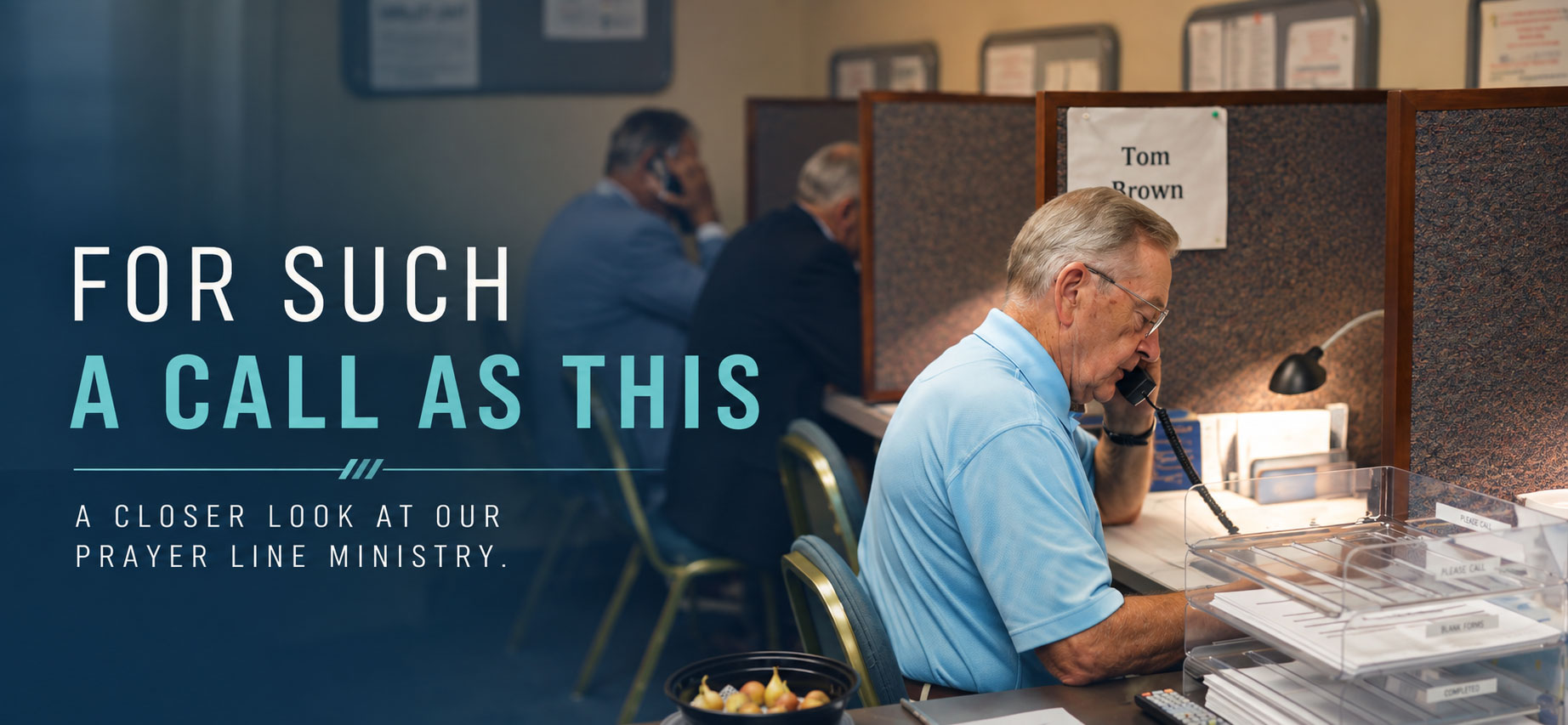
“I just really need Jesus.”
When Nathan Burgess heard those words through the phone, something changed.
An elderly woman had called First Baptist’s Prayer Line asking for prayer. She began by sharing some of what was happening in her life. Then she said it. She needed Jesus.
Nathan paused to make sure he understood what she meant. Was she asking for Jesus to help her through what she was facing—or was she saying that she was ready to place her faith in Him?
As they continued talking, the answer became clear. Nathan walked her through what it meant to place her faith in Christ. Then, over the phone, they prayed together as she made a decision to follow Jesus.
“The whole time I was talking to her, I just felt the Lord’s presence,” Nathan remembered. “After the phone call, I’m just like, ‘Okay, I need a minute, because the Lord just did something, and I just got to witness it.’”
A Bible was later prepared and mailed to her, with a personal note from Nathan inside. A member of our pastoral staff followed up with her afterward.
For Nathan, it was an unforgettable phone call, but inside a small tucked away room inside our church, conversations like it have been happening for decades.
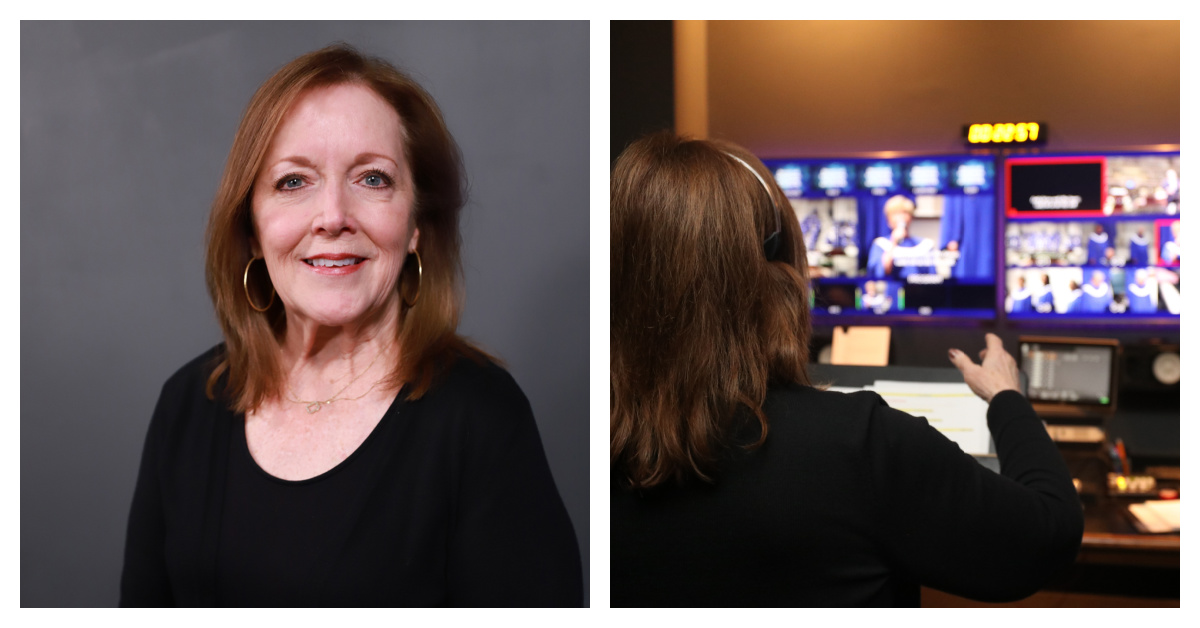
Every Sunday, as our worship service reaches people on television and online, a phone number appears on the screen.
Some viewers call because they are sick. Others are grieving. Some are facing financial struggles, family problems or decisions they do not know how to make. Some simply need someone to talk to. Others call to say thank you, share an answered prayer or express appreciation for the worship service they have just watched.
And occasionally, someone calls because he or she is ready to follow Christ.
On the other end of that number is a Prayer Line Encourager—a volunteer willing to listen, pray and point the caller toward the hope found in Jesus.
Former Broadcast Ministry Director Sylvia Rish describes Prayer Line as the “personal touch” of our Broadcast Ministry.
“We’re actually able to know and to pray for the individual prayer needs of the TV or the livestream viewers that call,” Sylvia said. “It has been a blessing to so many.”
Prayer Line was already well established when Sylvia joined the church staff in 1999, and some volunteers had already served for years. Over the decades as our television ministry expanded into markets across South Carolina and neighboring states, Prayer Line grew with it.
At its busiest, Sylvia remembers Sundays when more than 100 calls came in. Teams of volunteers served at different times throughout the day as the broadcast aired in different television markets.
And while many callers may never meet the person who answers their call, something deeply personal can form.
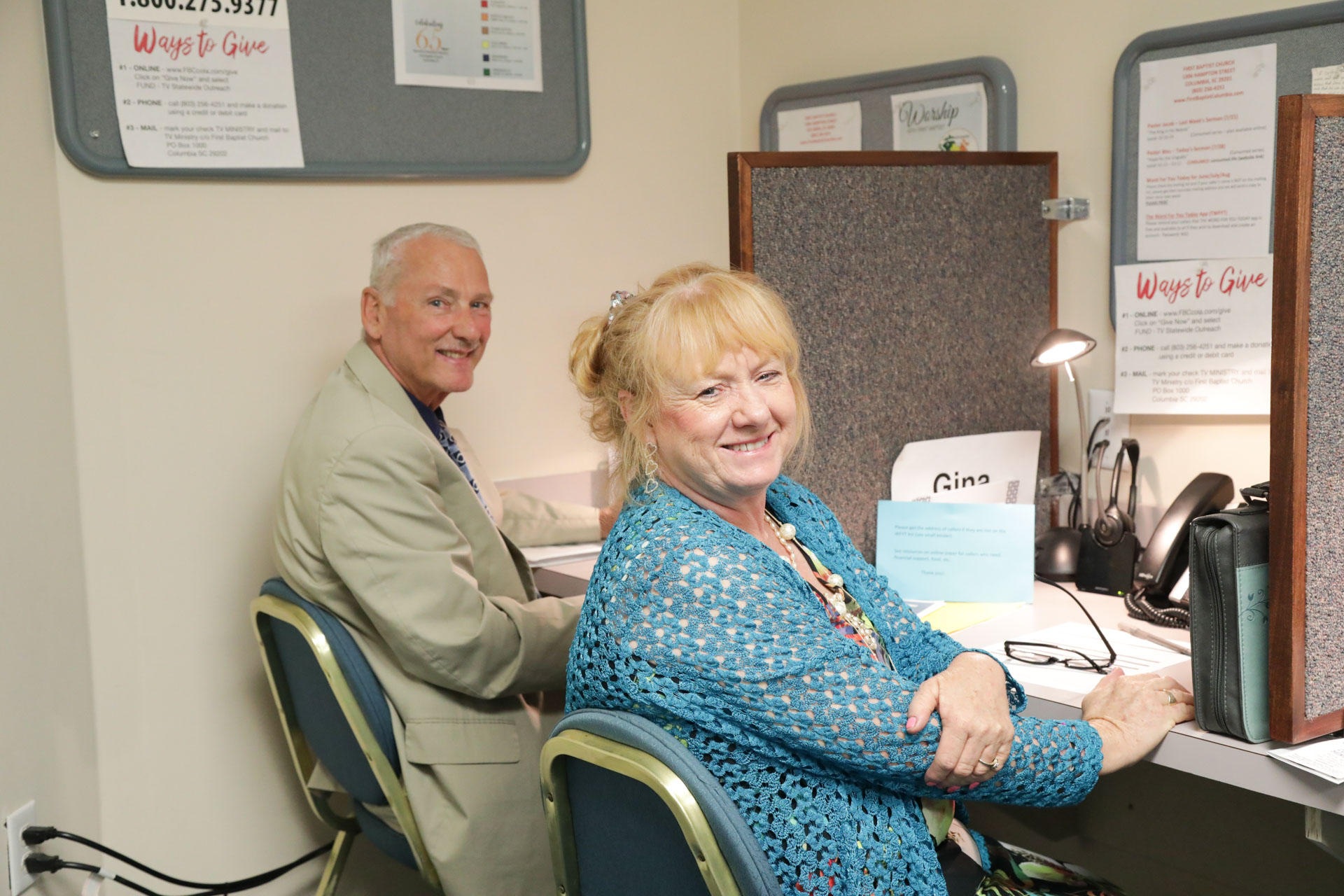
Doug and Gina Fore began serving with Prayer Line together in 2022. They had been encouraged to find a place of service, and Prayer Line immediately stood out.
For Doug, one thing became apparent as he spent more time talking with callers.
“The people that we talk to on the Prayer Line usually, they just want somebody to listen to them,” he said.
Over time, some callers become familiar voices. Prayer Line volunteers call them “regulars”—people who may call week after week, allowing relationships to develop even though the two people may never sit in the same room.
Doug remembers one regular caller whose birthday was approaching. The volunteers had all spoken with this person before and they wanted to celebrate with her. They got her a birthday card and everyone signed it. Doug described what that small gesture represented.
“That’s like a church wrapping their arms around these people,” he said. “I love that.”
For Gina, another call demonstrated just how meaningful those relationships can become.
A woman had previously spoken with longtime volunteer Tom Brown while her mother was hospitalized. The following week, she called again and happened to reach Gina. Her mother had died, but there was something she wanted Gina to do.
“She wanted me to make sure I told Tom,” Gina remembered.
The woman wanted him to know what had happened—and that she appreciated the prayer he had shared with her the week before. It was a small connection between two phone calls on two different Sundays, but it meant enough that she called back.
For Gina, those conversations don’t necessarily end when she leaves the Prayer Line room. She keeps the names of callers in the notes on her phone.
“Before I leave there, I write their names down so that I can continue to pray for them throughout the week,” she said.
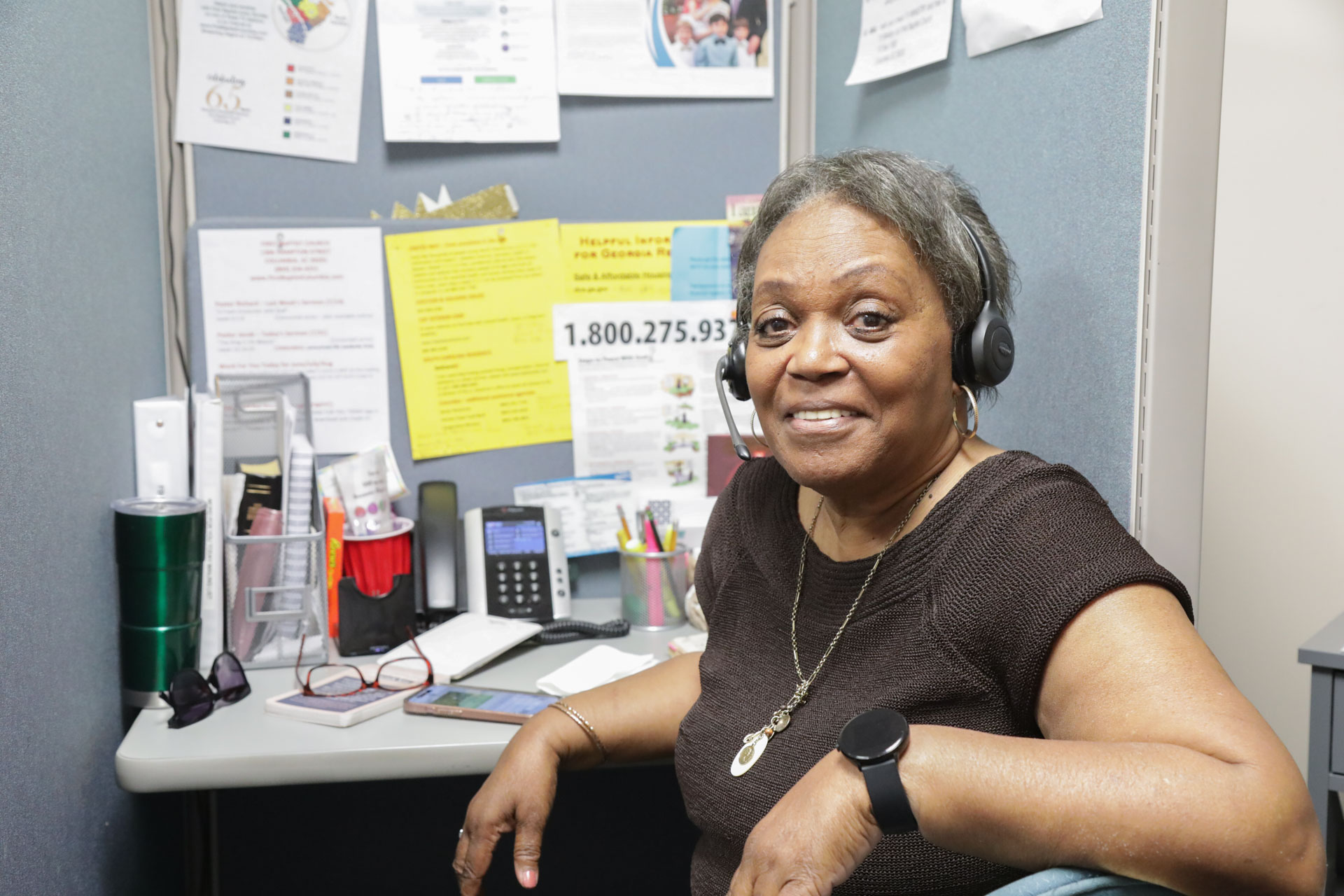
There is no way to know what will be waiting when the phone rings.
“You never know what you’re gonna hear on the other line,” Nathan said. “I’ve had times where people are crying, and I’ve had times where people are just calling to say thank you for the Prayer Line, for the service.”
Some conversations are relatively simple. Others are heavy enough that Nathan has occasionally needed a moment afterward to sit, pray and process what he has heard.
But he has learned that being an encourager is not about having a perfect response prepared.
Sylvia describes the first priority in much the same way. Before collecting information or trying to solve a problem, the volunteer needs to help the person on the other end feel comfortable enough to talk.
“The first step is to gain trust,” Sylvia said.
Some callers are initially hesitant even to give their names. That is okay. The conversation begins with listening. If a situation requires pastoral attention, volunteers can—with the caller’s permission—pass the information along for follow-up.
For Jeri Carter, who has served with Prayer Line for more than 14 years, listening means resisting the urge to move too quickly.
“What they first verbalize may not be the hidden agenda,” Jeri said. “It’s like a layered cake.”
A caller may begin with one concern, but as the conversation continues, something deeper can emerge. So Jeri listens.
Then she returns to the place she believes the answer must ultimately be grounded.
“I always put it back to the Scripture,” she said.
Jeri remembers talking with a man who wanted to be saved but believed coming to Christ required some complicated or formal process.
“You talk to Him just like I’m talking to you,” Jeri told him.
As they talked, the man began to understand that he could come directly to God in faith.
For Jeri, moments like that are why she continues answering the phone.
“It’s tough, but it’s rewarding,” she said. “If I can reach you through His Word, I have overcome, and then I get a blessing from the Lord.”
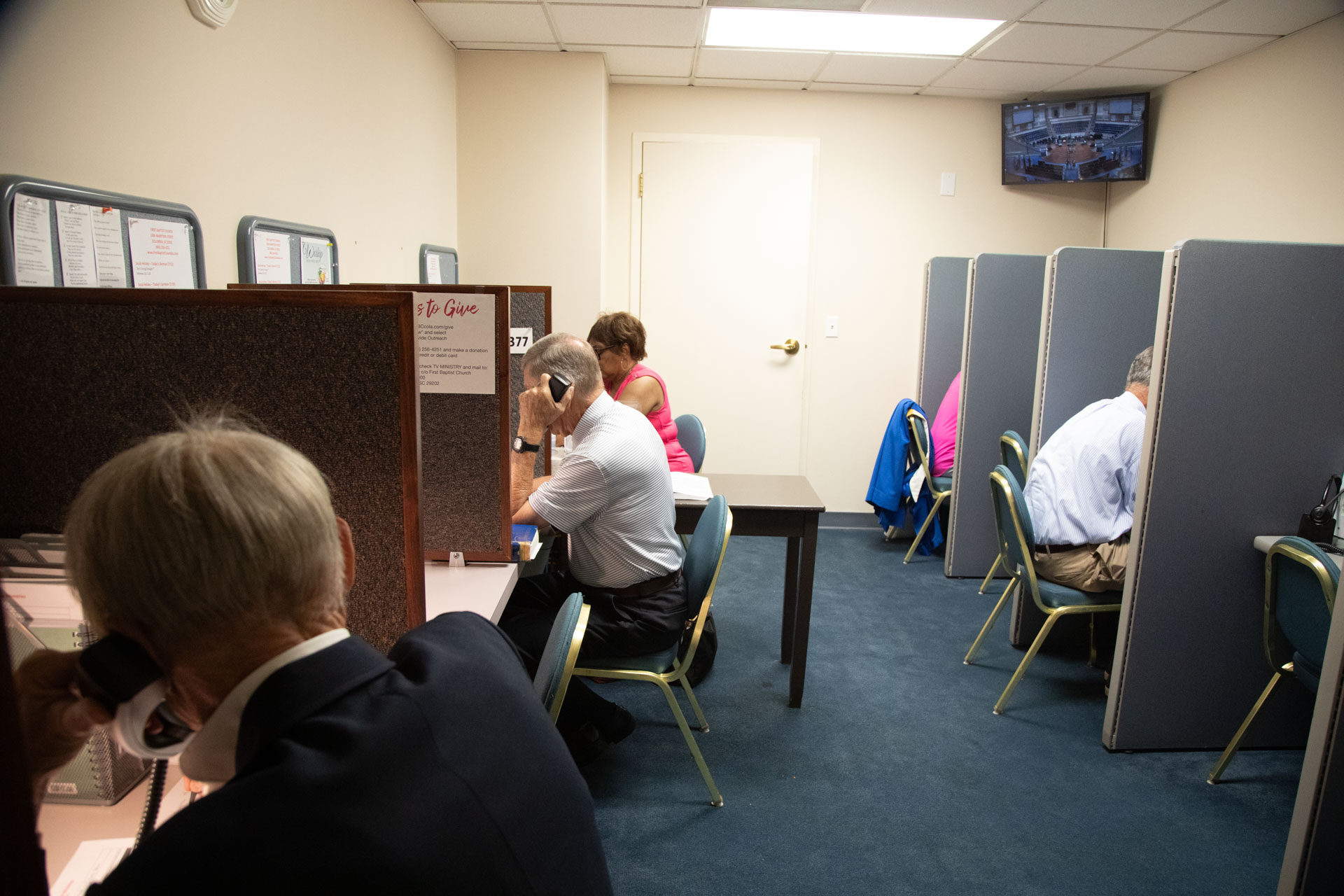
Prayer Line has never been intended to replace a local church, professional counseling or other forms of help. In fact, Sylvia intentionally moved away from the older title “Prayer Line Counselor” in favor of “Prayer Line Encourager.”
“We are not counselors,” Sylvia said. “We are people that love Jesus, and we want to share the love of Jesus with them and encourage them.”
That distinction helps explain what happens after someone calls.
Volunteers listen. They pray. When appropriate, they can point callers toward additional resources or arrange pastoral follow-up. They also intentionally ask about the caller’s relationship with Christ and encourage those who are disconnected from a church to find a faithful local church where they can grow in Christian community.
And when someone makes a decision to follow Christ, the ministry does not simply end the call and move on. A Bible is prepared for the new believer. The Prayer Line encourager who spoke with that person can write a personal message inside.
Gina has experienced that moment herself.
“I’ve never done that before, so I was a little nervous,” she remembered of leading a caller to Christ. “It was just the best feeling—to be able to lead somebody to our Lord.”
She still remembers writing an encouraging message inside the Bible that was sent afterward.
And when it happens, the celebration is not limited to the person on the phone.
“When someone hangs up from a phone call and they say, ‘The caller just accepted Jesus as Lord and Savior,’” Sylvia said, “it’s like the whole room just cheers.”
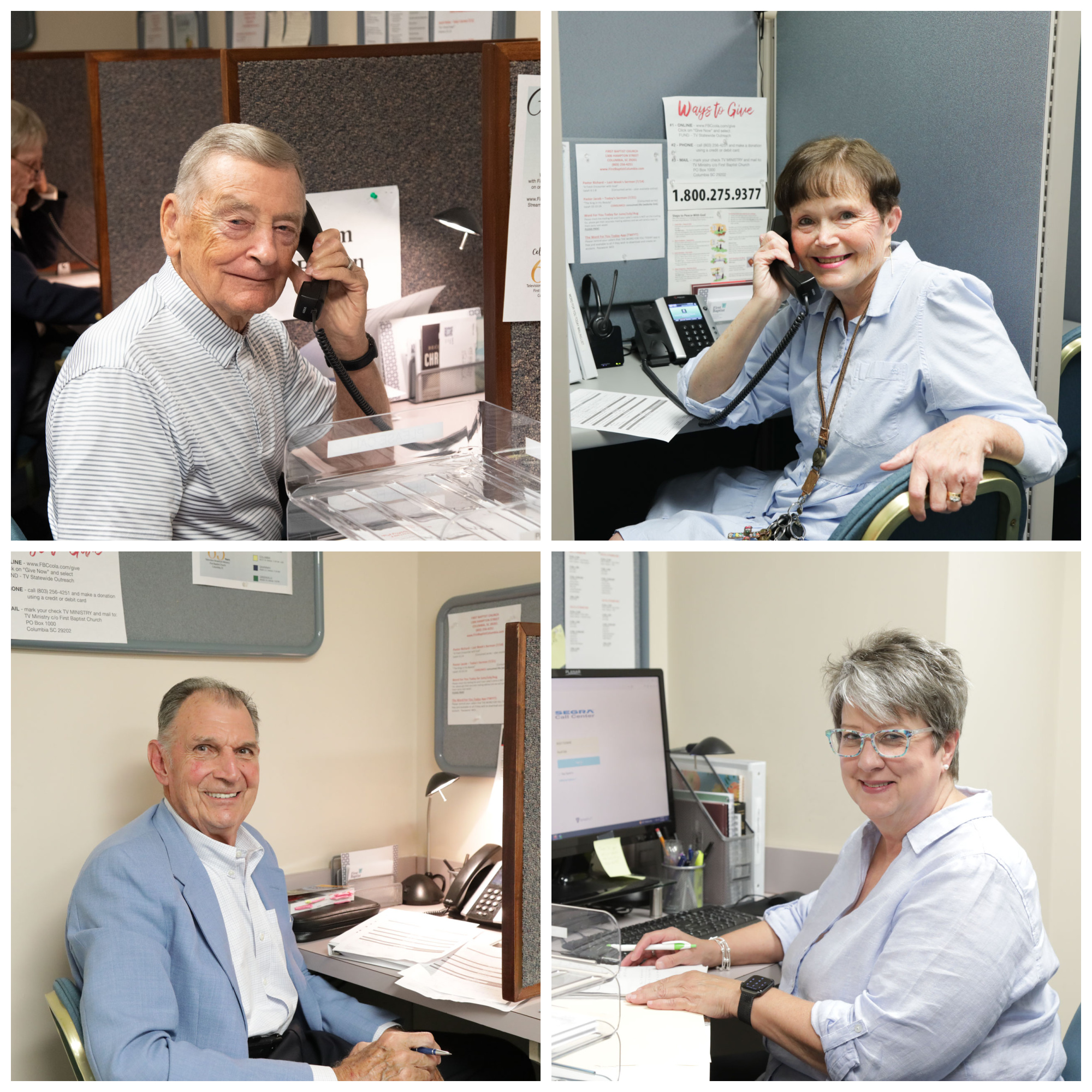
Ask longtime Prayer Line encouragers why they continue serving, and the answer eventually turns toward something unexpected.
The ministry changes them, too.
“Every Prayer Line encourager that I’ve ever served with,” Sylvia said, “they always say it blesses them more than they feel like they’re blessing the caller.”
Gina has experienced that personally.
“I think it solidified for me the power of prayer,” she said.
Serving on Prayer Line has changed what happens when someone in everyday life asks her to pray.
“When somebody asks us to pray, right away we go ahead and pray for them right then,” she said. “Why not take the opportunity right then?”
Nathan has noticed a similar change. Conversations with strangers on the Prayer Line have made him more attentive to opportunities to encourage the people already around him—coworkers, friends and family.
The ministry also creates an unexpected kind of discipleship inside the Prayer Line room itself.
When Nathan first began serving as an associate deacon, he sometimes found himself sitting near volunteers who had spent years answering calls. He listened to how they prayed, how they responded and how naturally they spoke with people in difficult circumstances.
“You kind of just learn to listen when you get an opportunity,” he said.
Gina remembers doing the same thing.
“When I first got in there, between phone calls, I would listen to others pray,” she said. “It just touched me listening to them pray.”
Sylvia saw that happen for years—one encourager learning from another, one person’s life experience suddenly becoming exactly what a caller needed.
“You hear one of them on the phone with somebody, and you go, ‘Oh my gosh, Lord, that’s impacting me,’” she said.
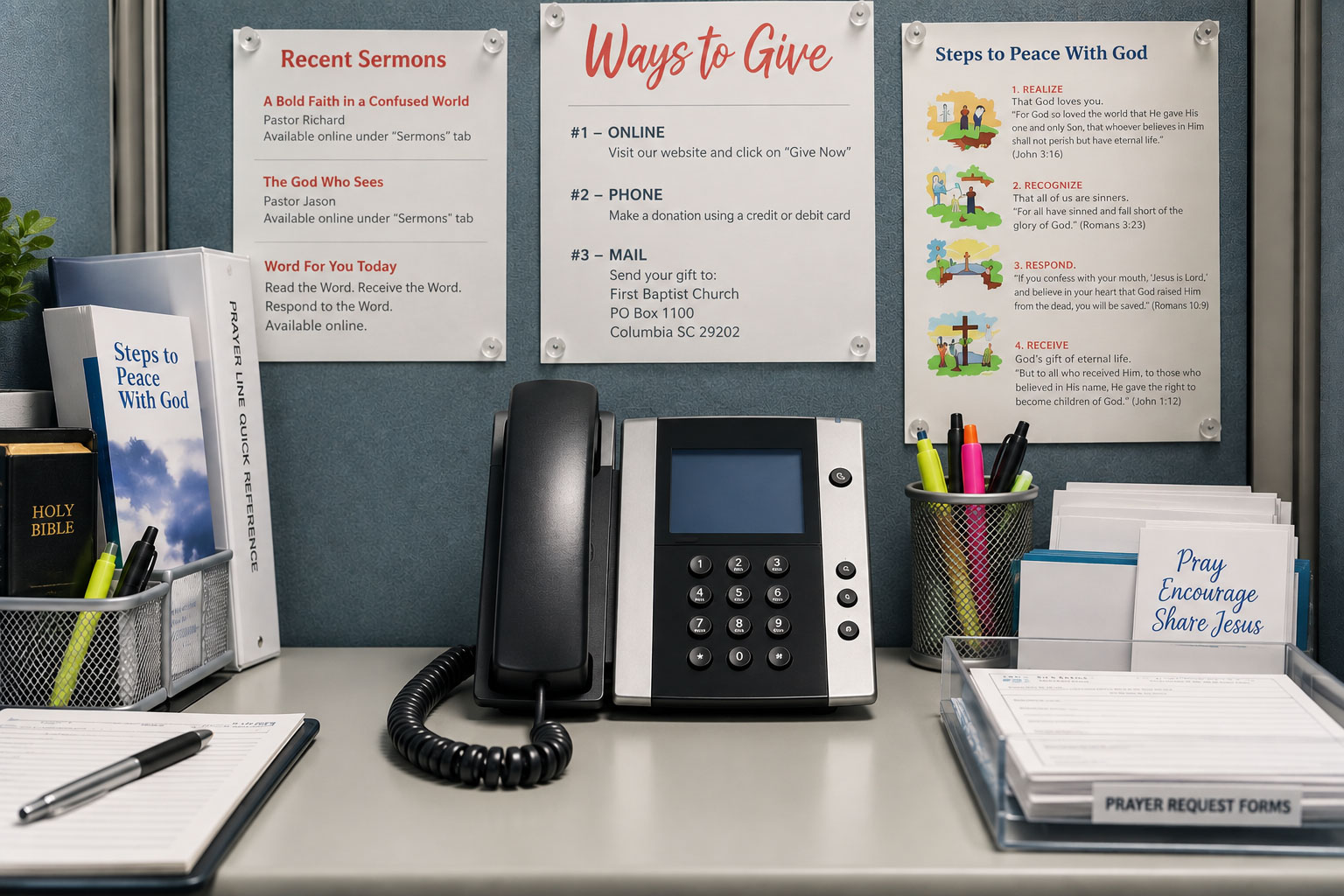
The Prayer Line room is easy to miss.
Most of us never see what happens inside Prayer Line on a Sunday morning. Viewers watching from home may know only the phone number that appears on their screen, but behind that number are people who continue to show up.
They don’t have every answer. They aren’t professional counselors. And they don’t need a theological degree before they can care for someone who calls.
What is needed is much simpler: believers willing to listen, willing to pray, and willing to trust God with whatever conversation comes through the phone.
Prayer Line is always looking for more of them.
Nathan first entered the room because serving there was part of his role as an associate deacon. He admits that before then, he didn’t even know the ministry existed.
Now, as he thinks about the day when his associate deacon term ends, he doesn’t want his involvement with Prayer Line to end with it.
“I still would love to try to be a part of it,” he said. “It’s definitely fulfilling.”
Because every Sunday, somewhere beyond the walls of our church, someone may see a number appear on a television screen.
They may be grieving. They may simply need someone to listen. Or they may be ready to say:
“I just really need Jesus.”
And when they make that call, someone will be there to answer.
Special thanks to Nathan Burgess, Jeri Carter, Doug and Gina Fore, and Sylvia Rish for sharing their experiences and helping tell the story of First Baptist’s Prayer Line Ministry. Their interviews, firsthand accounts, and reflections provided the foundation for this article.
We are also grateful for all of our Prayer Line volunteers—both associate deacons and church members—who faithfully give their time to listen, encourage, and pray with those who call. Their willingness to simply be there on the other end of the line continues to make this ministry possible.
Interested in serving? Prayer Line is always looking for volunteers willing to serve as Prayer Line Encouragers and answer calls from those seeking prayer. To learn more about serving, contact Shari Stepanov at sharistepanov@fbccola.com.